

If you’ve been looking into home battery storage, understanding the numbers may feel confusing. But sizing a battery for your home is actually pretty straightforward once you understand a few basics.
In this guide, we’ll walk you through exactly how to work out how much battery storage you need, whether you already have solar panels, you’re planning to install them, or you simply want to use cheap overnight tariffs to cut what you pay for electricity.
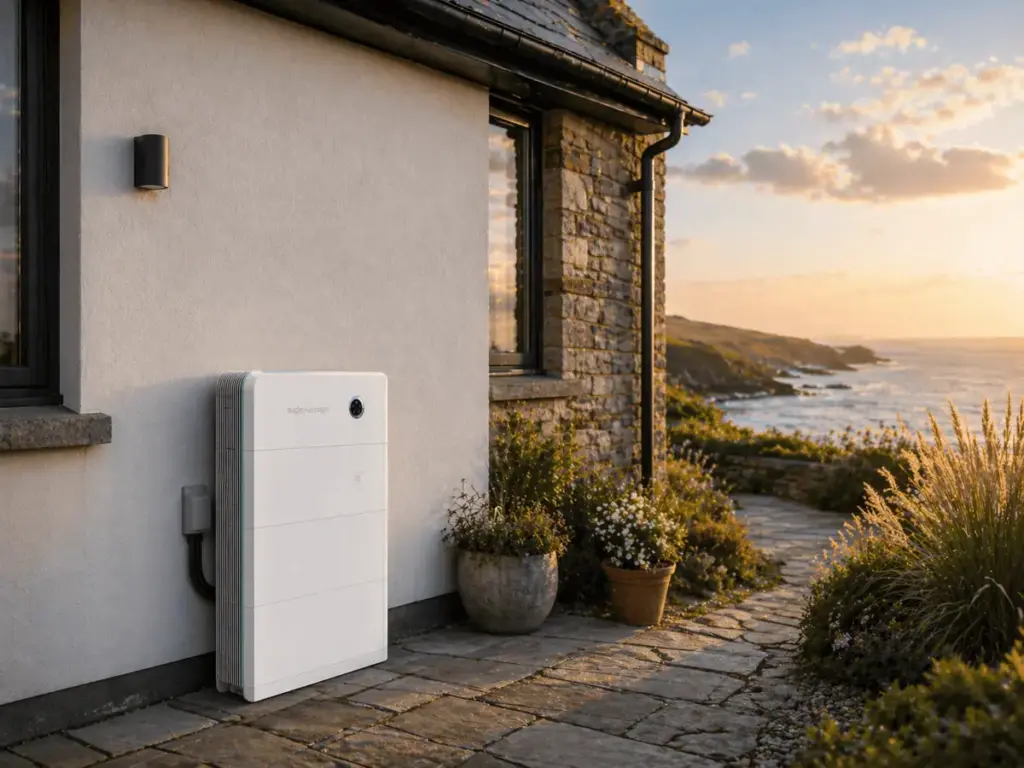
What Is Battery Storage Capacity?
When we talk about battery size, we’re talking about energy storage capacity, measured in kilowatt-hours (kWh). This tells you how much electricity the battery can store and supply to your home.
Step 1: Know Your Daily Energy Usage
The starting point for any battery sizing calculation is understanding how much electricity your household actually uses.
The average UK home uses 8–10 kWh of electricity per day. But that’s just an average, and your home might be quite different.
The best place to start is your electricity bill or smart meter. Look at your annual kWh figure and divide by 365 to get your average daily usage. If you have a smart meter app, you can often see daily breakdowns and spot your peak usage times.
Step 2: Match the Battery to Your Goal
Not everyone needs a battery for the same reason. Your goal shapes the size you need.
Goal 1: Maximise Solar Self-Consumption
If you have solar panels (or are installing them alongside a battery), the aim is to store the energy generated during the day and use it in the evening and overnight rather than selling it back to the grid and buying it back later for more.
For this use case, you want a battery that can hold roughly your evening and overnight electricity demand, typically the hours between when the sun goes down and when it rises again the following morning.
For most UK households, this works out to 5–10 kWh for a typical three-bedroom home. If your evening usage is higher, or you want to cover more of the overnight period, a 10–13 kWh battery gives you extra headroom.
Goal 2: Time-of-Use Tariff Optimisation
Batteries aren’t just for solar homes. On smart tariffs like Octopus Flux or Agile, you can charge your battery overnight when electricity costs as little as 7p per kWh and use that stored energy during expensive peak hours. This works extremely well even without panels on your roof.
For this strategy, you want enough capacity to cover your peak-hours usage, broadly late afternoon through evening. A 5–10 kWh battery works well for most households.
Goal 3: Whole-Home Backup Power
The sizing conversation changes if you want your home to keep running during a power cut and essential appliances are involved. You’ll need enough stored energy to get you through an extended outage.
A 13–15 kWh battery provides meaningful backup for a typical home. If you want genuinely comprehensive coverage (including a heat pump or EV charging), you may need two batteries or a high-capacity system like the Tesla Powerwall 3, which has a single-unit usable capacity of 13.5 kWh and exceptional backup power output.
A Quick Guide by Household Size
| Household | Typical Daily Use | Recommended Battery Size |
| 1–2 people, smaller home | 5–7 kWh | 5–8 kWh |
| 3–4 people, 3-bed home | 8–10 kWh | 9.5–13 kWh |
| Larger home, 4+ people | 10–14 kWh | 13–16 kWh |
| EV owner (charging at home) | Add 5–10 kWh | Add 5–10 kWh capacity |
| Heat pump | Add 10–15 kWh | Consider two batteries |
These are starting points and every home is different, which is why a proper site assessment always gives you a more accurate answer.
Step 3: Account for Usable Capacity vs. Headline Capacity
The figure on the spec sheet isn’t always what you get. Most batteries hold a small reserve in their cells to protect longevity. A battery with a headline capacity of 10 kWh might offer 9–9.5 kWh of usable storage.
Modern lithium iron phosphate (LFP) batteries typically offer 90–100% depth of discharge. The Powerwall 3, for example, offers 100% usable capacity.
When comparing batteries, always check the usable kWh figure.
What About Solar Panel System Size?
If you’re pairing a battery with solar panels, the two systems need to work well together. As a rough guide:
- 4 kW solar system = 6–10 kWh battery
- 6 kW solar system = 9–15 kWh battery
- 8 kW solar system = 12–20 kWh battery
The idea is to size the battery to capture most of what your panels generate on a typical day without being so large that it rarely fills up. An oversized battery that only ever reaches 50% charge isn’t working as hard as it should, and it costs more upfront for no extra benefit.
It’s worth remembering that UK solar generation varies enormously with the seasons. Summer days can produce five or six times more than winter days. A good installer will design your system with this in mind.
Don’t Forget Future-Proofing
It’s worth thinking about what your energy needs might look like in three to five years. If there’s a chance your needs will grow, either size up now or choose a modular battery system that can be expanded later. Some batteries, like the Sigenergy range, are designed with modularity in mind. Others, like the Tesla Powerwall, are fixed-capacity units, so you’d add a second unit rather than expanding an existing one.
The 0% VAT Opportunity
It’s also worth knowing that all residential battery storage systems in the UK currently benefit from 0% VAT. This has made a real difference to the overall cost of getting a system installed, and it applies whether you’re a new customer or adding to an existing setup.
So, What’s the Right Answer for Your Home?
For most Cornwall homes, the answer is somewhere between 9.5 and 13.5 kWh of usable battery storage, enough to cover a full evening of typical usage with some reserve for overnight, without paying for more than you’ll realistically use.
But the right answer for your home depends on your actual consumption, your solar system (if you have one), whether you have an EV or heat pump, and what you want the battery to do for you. That’s something we work out properly during a personal site visit.
At Wired by Jessops, Joe visits every customer personally to assess your property and energy usage and builds a system designed around your household.
Ready to Find Out What Your Home Needs?
If you’re thinking about battery storage, whether alongside solar or as a standalone system, we’d love to help you work it out properly.
Book Your Personal Site Visit.