
If you’ve been researching home battery storage, you’ve likely come across the Sigenergy SigenStor.
It’s one of the more interesting home energy systems currently available in the UK because it takes a different approach to conventional battery storage. Rather than installing a separate solar inverter, battery, energy management system and EV charger, SigenStor brings these technologies together into one modular system.
But what does that actually mean for your home? How much electricity can a SigenStor store? How big is it? And how many battery modules do you really need?
In this guide, we’ll break down the Sigenergy SigenStor specifications, battery capacity, dimensions, power output and installation options so you can understand exactly what you’re getting.
What Is the Sigenergy SigenStor?
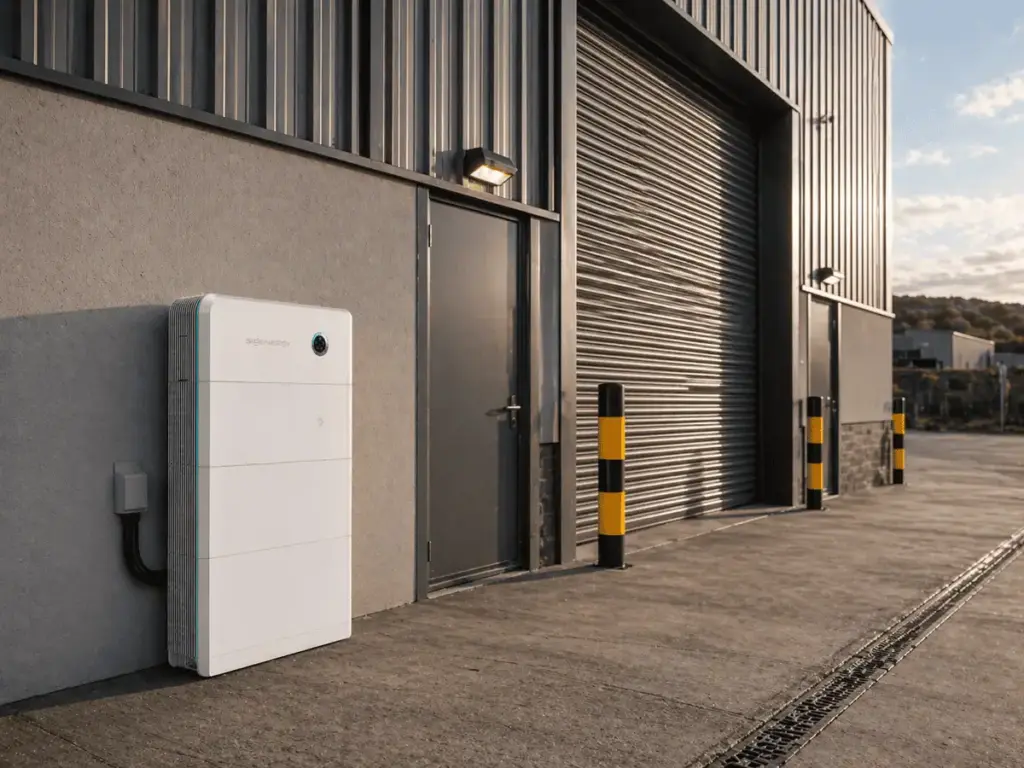
The Sigenergy SigenStor is a modular home energy storage system designed to manage solar generation, battery storage, home electricity consumption and, optionally, EV charging through one integrated platform.
Rather than thinking of it purely as a solar battery, it makes more sense to think of SigenStor as the energy hub for your home.
Depending on the configuration, the system can incorporate:
- Solar inverter
- Battery storage
- Battery power conversion
- Energy management
- Backup power
- Optional DC EV charging
The big advantage is modularity. You can choose the inverter output and battery capacity that suit your property rather than being restricted to one fixed battery size.
That also means the system can grow with you. If your electricity consumption increases because you buy an EV, install a heat pump or simply want greater energy independence, additional battery capacity can potentially be incorporated into the system.
Sigenergy SigenStor Specs at a Glance
Here are some of the key specifications homeowners are likely to want to know.
| Specification | Sigenergy SigenStor |
| Battery chemistry | Lithium iron phosphate (LiFePO4/LFP) |
| Battery module options | Sigen Battery 5.0 and 8.0 |
| Total capacity per module | 5.38 kWh or 8.06 kWh |
| Usable capacity per module | 5.2 kWh or 7.8 kWh |
| Maximum modules per controller | 6 |
| Maximum battery capacity with six 8.0 modules | 48.36 kWh total |
| Depth of discharge | 100% of specified usable capacity |
| Battery module dimensions | 767 × 270 × 260 mm |
| Battery module weight | 55 kg or 70 kg |
| Energy Controller dimensions | 700 × 300 × 260 mm |
| Ingress protection | IP66 |
| Battery cooling | Natural convection |
| Battery cycle-life specification | 10,000 cycles* |
| Installation | Floor-standing or wall-mounted |
| Optional DC EV charging | Yes |
*Cycle-life figures are based on the battery-cell manufacturer’s specified test conditions.
The key point is that SigenStor isn’t a fixed-size battery. Its capacity depends on which battery modules you choose and how many are installed.
How Much Energy Can a Sigenergy SigenStor Store?
Sigenergy currently specifies two SigenStor battery modules:
Sigen Battery 5.0
The Sigen Battery 5.0 provides:
5.38 kWh total capacity
5.2 kWh usable capacity
Each module weighs approximately 55 kg.
Sigen Battery 8.0
The larger Sigen Battery 8.0 provides:
8.06 kWh total capacity
7.8 kWh usable capacity
Each module weighs approximately 70 kg.
Because SigenStor is modular, multiple batteries can be stacked together.
Using the larger 8.0 battery modules, for example:
| Number of Batteries | Total Capacity |
| 1 | 8.06 kWh |
| 2 | 16.12 kWh |
| 3 | 24.18 kWh |
| 4 | 32.24 kWh |
| 5 | 40.30 kWh |
| 6 | 48.36 kWh |
That scalability is one of the biggest differences between SigenStor and many fixed-capacity home batteries.
You don’t necessarily have to install a huge battery system from day one. A properly designed system should be based on how much electricity your home actually uses, how much solar you generate and what you expect your future energy requirements to look like.
What Sigenergy Battery Capacity Do I Need?
For most homes, bigger isn’t automatically better.
The objective is to install enough battery storage to capture the energy you would otherwise export or to shift enough grid electricity from expensive periods to cheaper ones.
As a rough starting point, many UK households use around 8–10 kWh of electricity per day, although homes with EVs, electric heating or heat pumps can use considerably more.
A single 7.8 kWh usable Sigen Battery 8.0 could therefore represent a substantial proportion of a typical household’s daily electricity requirement.
Two modules provide 15.6 kWh of usable nominal module capacity, making this kind of configuration potentially more appropriate for households with higher consumption or those looking to store more solar generation.
Three or more modules start to make sense for substantially higher electricity loads, larger solar arrays or homes moving further towards electrification.
But don’t size a battery from national averages alone.
We look at your actual electricity consumption, solar generation, peak loads, tariff and plans before recommending a system. An oversized battery that regularly sits half empty isn’t necessarily a better investment.
What Are the Sigenergy SigenStor Dimensions?
This is particularly important if you’re trying to work out where the system can actually go.
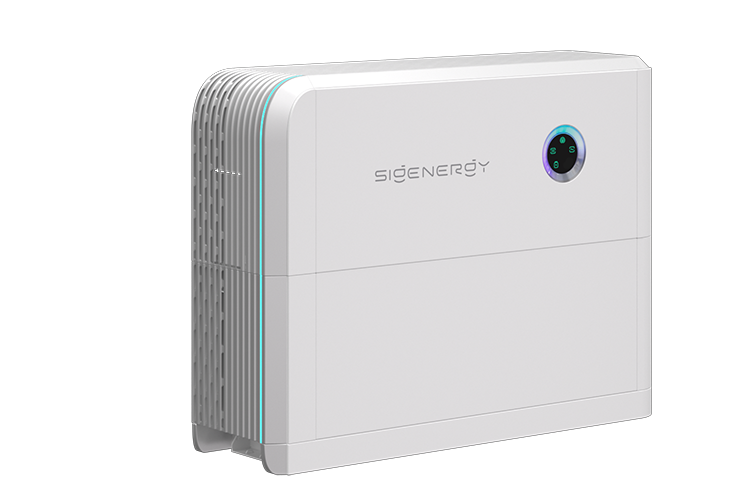
An individual Sigen Battery 5.0 or 8.0 measures 767 mm wide × 270 mm high × 260 mm deep.
The Energy Controller is approximately:
700 mm wide × 300 mm high × 260 mm deep
Because the batteries stack vertically, the system gets taller as storage capacity increases rather than taking up significantly more floor area.
Using Sigen Battery 8.0 modules with a three-phase Energy Controller, Sigenergy gives the following example overall dimensions:
| Battery Modules | Overall Height | Overall Width | Overall Depth |
| 1 | 640 mm | 850 mm | 260 mm |
| 2 | 910 mm | 850 mm | 260 mm |
| 3 | 1,180 mm | 850 mm | 260 mm |
| 4 | 1,450 mm | 850 mm | 260 mm |
| 5 | 1,720 mm | 850 mm | 260 mm |
| 6 | 1,990 mm | 850 mm | 260 mm |
So even a large-capacity SigenStor installation maintains a relatively small footprint.
A six-module example is just under 2 metres tall, while remaining around 850 mm wide and 260 mm deep with the decorative covers specified in Sigenergy’s example configuration.
Actual installation requirements, clearances and system configuration still need to be assessed for the individual property.
How Heavy Is a SigenStor?
Weight increases considerably as battery modules are added.
Using Sigenergy’s Sigen Battery 8.0 three-phase ground-mounted example:
| Battery Modules | Approx. Total Weight |
| 1 | 112 kg |
| 2 | 183 kg |
| 3 | 254 kg |
| 4 | 325 kg |
| 5 | 396 kg |
| 6 | 467 kg |
This is why battery location isn’t simply an aesthetic decision.
The mounting surface, access, electrical infrastructure, environmental conditions and manufacturer installation requirements all need to be considered before deciding where a SigenStor should go.
How Powerful Is the SigenStor Battery?
Capacity and power are two different things.
Battery capacity, measured in kWh, tells you how much electricity can be stored.
Power, measured in kW, tells you how quickly that electricity can be supplied.
The Sigen Battery 5.0 has a maximum charge/discharge power of 2.5 kW per module, while the Sigen Battery 8.0 is rated at 4 kW per module.
The 8.0 can also provide a specified 6 kW peak charge/discharge output for 10 seconds.
Stacking batteries increases the potential combined battery charge and discharge capability. Six 8.0 modules, for example, are specified at up to 24 kW maximum charge/discharge power at battery level.
Actual system output will also depend on the Energy Controller, electrical supply and overall system design.
This distinction matters.
A battery could theoretically contain enough energy to run your home for many hours but still be unable to supply every high-powered appliance simultaneously if the system’s instantaneous power output isn’t high enough.
That’s why we consider both kWh capacity and kW output when designing battery storage.
What Inverter Sizes Are Available With SigenStor?
Another advantage of the SigenStor architecture is the choice of Energy Controllers.
Sigenergy offers both single-phase and three-phase configurations, allowing the system to be specified for everything from relatively conventional homes through to larger residential and commercial installations.
Rather than treating the inverter as an entirely separate piece of equipment, it forms part of the SigenStor ecosystem.
This allows solar generation, battery charging, battery discharge and household consumption to be managed together.
For homeowners, the important thing isn’t simply choosing the biggest inverter available. The Energy Controller needs to be matched correctly to the solar array, battery capacity, household electrical supply and expected loads.
Can SigenStor Provide Backup Power During a Power Cut?
Yes, SigenStor can be configured to provide backup power when installed with the appropriate Sigenergy equipment and system design.
This can allow selected circuits, or potentially much more of the property depending on the installation, to continue operating if grid power fails.
Backup capability needs to be designed properly from the outset.
There is a significant difference between wanting to keep your broadband, lights and fridge running and expecting your entire electrically heated home to continue operating normally during an outage.
We establish which loads actually need backup before designing the system around them.
Can SigenStor Charge an Electric Car?
This is one of SigenStor’s standout features.
Sigenergy offers an optional Sigen EV DC Charging Module, available with charging power up to 12.5 kW or 25 kW, depending on configuration.
Rather than solar electricity being converted from DC to AC before being converted back to DC by the vehicle, an integrated DC charging architecture can make energy transfer more direct.
The charging module uses a CCS2 interface and measures approximately:
700 mm wide × 270 mm high × 260 mm deep.
For households planning to combine solar panels, battery storage and an electric vehicle, having all three technologies designed as part of the same ecosystem is a compelling feature.
Vehicle-to-home and vehicle-to-grid capabilities are more complicated because compatibility also depends on the vehicle, applicable standards and supported functionality, so this should always be checked for the specific car rather than assumed.
Is the Sigenergy SigenStor Weatherproof?
SigenStor’s battery and Energy Controller are specified with an IP66 ingress protection rating.
In simple terms, that means the enclosure provides a high level of protection against dust and water ingress.
However, an IP rating doesn’t mean a battery should simply be installed anywhere outside.
Location still needs to account for the manufacturer’s installation requirements, ventilation, temperature, access, electrical regulations and the suitability of the mounting surface.
The best battery location is determined during the site survey rather than after the equipment arrives.
What Battery Chemistry Does SigenStor Use?
The SigenStor uses lithium iron phosphate (LiFePO4 or LFP) battery chemistry.
LFP has become increasingly common in modern home energy storage because of its combination of durability, thermal stability and cycle life.
Sigenergy specifies a battery-cell cycle life of 10,000 cycles under stated test conditions.
As with any battery specification, it’s important to understand what that figure means. Battery lifespan in the real world will depend on usage, charging patterns, operating temperature and other factors.
Is Sigenergy SigenStor Worth It?
For the right home, SigenStor is one of the most flexible battery storage platforms currently available.
Its main advantage isn’t any single headline specification. It’s the way the entire system fits together.
You can combine solar generation, modular battery storage, energy management, backup capability and optional DC EV charging within one ecosystem.
That makes SigenStor particularly interesting if you’re thinking beyond today’s electricity consumption.
Perhaps you currently have solar but plan to buy an EV. Maybe you’re considering a heat pump. Or perhaps you want to start with a smaller battery and retain the option to increase storage capacity later.
In those situations, SigenStor’s modular design can make a lot of sense.
But it won’t automatically be the right battery for every property.
The right battery is the one correctly sized around your home, electricity consumption, solar generation, budget and plans for the future.
Sigenergy SigenStor FAQs
How much storage does a Sigenergy SigenStor have?
SigenStor uses modular batteries. The Sigen Battery 5.0 has 5.38 kWh total and 5.2 kWh usable capacity, while the Sigen Battery 8.0 has 8.06 kWh total and 7.8 kWh usable capacity. Multiple modules can be combined to increase storage.
What is the maximum SigenStor battery capacity?
A Sigen Energy Controller supports up to six battery modules. Using six Sigen Battery 8.0 modules provides 48.36 kWh total battery capacity.
What are the dimensions of a SigenStor battery?
Each Sigen Battery 5.0 or 8.0 measures approximately 767 mm wide × 270 mm high × 260 mm deep.
How tall is a complete SigenStor?
The height depends on the number of batteries installed. In Sigenergy’s example ground-mounted configuration using 8.0 modules, the system ranges from approximately 640 mm high with one battery to 1,990 mm with six batteries.
How wide is the Sigenergy SigenStor?
Sigenergy’s example stacked configuration is approximately 850 mm wide with decorative covers fitted.
Can you add more batteries to SigenStor later?
SigenStor is designed as a modular battery system, making capacity expansion one of its main advantages. Whether additional batteries can be added to a particular existing installation should be checked against the system configuration and current manufacturer requirements.
Can Sigenergy work without solar panels?
Battery storage can be used without solar generation, allowing electricity to be charged from the grid during cheaper tariff periods and used later. The financial benefit depends heavily on your electricity tariff and consumption pattern.
Does SigenStor work with solar panels?
Yes. Solar integration is one of SigenStor’s core functions. The Sigen Energy Controller manages PV generation alongside battery storage and household electricity consumption.
Does SigenStor work with EV charging?
Yes. An optional Sigen EV DC Charging Module is available, with 12.5 kW and 25 kW variants specified by Sigenergy. Compatibility and available functionality should be confirmed for the vehicle and installation.
Is SigenStor suitable for UK homes?
Yes. SigenStor is available in single-phase and three-phase configurations suitable for different UK electrical installations. The correct configuration depends on the property’s supply, solar array, electricity consumption and required battery capacity.
Thinking About Installing Sigenergy SigenStor?
The technology is only half the equation.
Getting battery storage right means understanding how your home actually uses electricity and designing the solar, inverter and battery capacity around that.
At Wired by Jessops, we don’t start by deciding which battery we want to sell you. We start by looking at your home.
We assess your electricity consumption, existing or proposed solar system, available installation space, EV or heat-pump plans and what you actually want your battery to achieve.
From there, we can work out whether Sigenergy SigenStor is the right system for your property and, crucially, what size it should be.
If you’re considering solar panels, battery storage or a complete home energy system, speak to the Wired by Jessops team to arrange an assessment.